
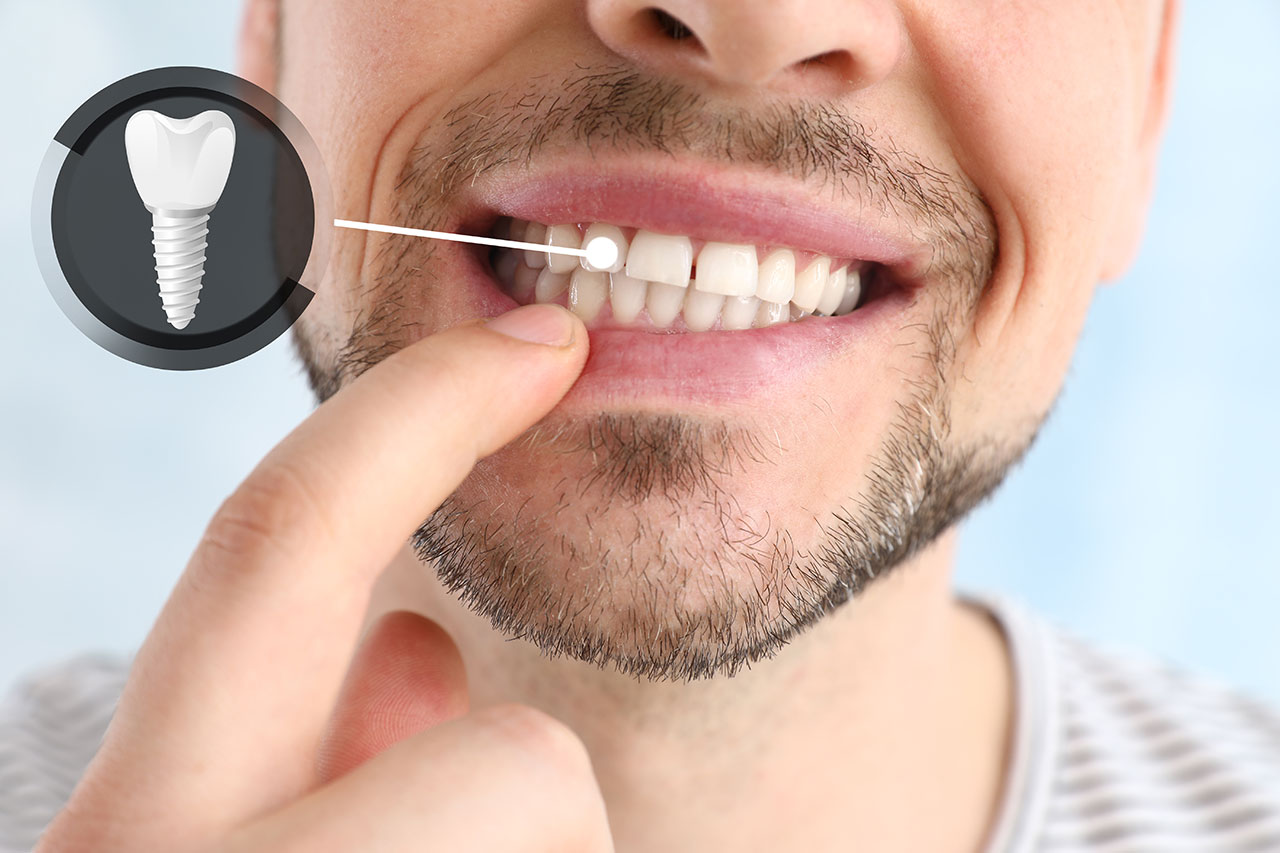
What happens when one missing tooth begins affecting the way you chew, speak, or feel about your smile? A gap may involve only one tooth, but its effects can extend beyond that space. For qualifying patients, dental implants can provide a fixed approach to replacing a missing tooth while closely recreating the structure of a natural tooth.
Single-tooth dental implants are designed specifically for situations in which one tooth needs to be replaced. Instead of relying on neighboring teeth to support the replacement, a dental implant is positioned in the jaw and later restored with an individual crown. Consequently, the restoration is designed to function independently within the smile.
What Are Single-Tooth Dental Implants?
Single-tooth dental implants generally consist of several components that work together to replace the missing tooth from below the gumline to the visible chewing surface.
The implant itself is a small post placed into the jaw in the area of the missing tooth. During healing, the surrounding bone can form a stable connection with the implant surface. An abutment then connects the implant to the final dental crown.
The crown is the visible portion of the restoration. It is designed to resemble a tooth and is customized for the space being restored. Together, these components allow single-tooth dental implants to replace both the visible crown of a natural tooth and its missing root structure.
Why Replace a Single Missing Tooth?
It can be tempting to ignore a missing tooth, particularly if the gap is toward the back of the mouth. However, each tooth is part of a larger system. Teeth help maintain contact with neighboring teeth and contribute to the way the bite comes together.
When a tooth is lost, nearby teeth may gradually change position. The opposing tooth may also experience changes because it no longer has the same contact during biting. In addition, the bone in the area no longer receives stimulation from a natural tooth root.
Replacing the missing tooth can therefore address more than appearance. The goal may also include restoring chewing function, supporting a stable bite, and filling an open space before neighboring teeth have an opportunity to drift substantially.
Benefits of Single-Tooth Dental Implants
For appropriately selected patients, single-tooth dental implants offer several characteristics that make them an attractive tooth replacement option.
- Independent support: The implant-supported crown does not typically require neighboring teeth to serve as anchors.
- Natural-looking restoration: The final crown can be designed to complement nearby teeth in shape, proportion, and appearance.
- Restored chewing function: A stable replacement can help patients use the affected area more normally again.
- Replacement of the missing root: The implant occupies the jawbone where the natural tooth root was previously located.
- Fixed tooth replacement: Unlike a removable partial denture, a single implant crown is designed to remain in place.
- Preservation of neighboring tooth structure: In many cases, adjacent teeth do not have to be reshaped simply to support the implant restoration.
- Long-term restorative potential: With appropriate care and maintenance, dental implants are designed to serve as durable tooth replacement solutions.
However, no treatment is maintenance-free. Single-tooth dental implants still require careful brushing, cleaning around the implant, and regular professional dental care.
Who May Be a Candidate for a Single-Tooth Dental Implant?
Candidacy depends on much more than simply having a missing tooth. A dental professional must evaluate the health of the gums, the quantity and quality of available bone, the condition of surrounding teeth, and the patient's overall dental situation.
Patients also need to be healthy enough to undergo the planned procedure and healing process. Medical history, medications, tobacco use, oral hygiene, and other factors may influence treatment planning.
Dental imaging is often particularly valuable when evaluating single-tooth dental implants. Three-dimensional information can help the provider assess available bone and nearby anatomical structures before planning implant placement.
When bone volume is insufficient, additional procedures may sometimes be discussed. Therefore, an implant consultation should focus on the individual patient's anatomy rather than assuming every missing tooth can be treated in exactly the same way.
What Is the Process for Single-Tooth Dental Implants?
Although treatment varies from person to person, single-tooth dental implants commonly follow several broad stages.
1. Examination and Planning
The dentist examines the missing-tooth area, surrounding teeth, gums, bite, and available bone. Dental images may be taken, and treatment goals are discussed. If the tooth still needs to be removed, extraction timing may also become part of the plan.
2. Implant Placement
The dental implant is placed into the planned position within the jawbone. The area is then allowed to heal according to the provider's instructions.
3. Healing and Integration
Healing is important because the implant needs a stable relationship with the surrounding bone before receiving normal chewing forces from the final restoration. The amount of healing time required varies among patients and treatment situations.
4. Abutment and Crown
Once the implant is ready to be restored, an abutment provides the connection between the implant and crown. The crown is then designed to fit the space and complement the surrounding teeth.
In some cases, the sequence may differ. Therefore, patients should rely on their personalized treatment plan rather than a generic timeline.
Single-Tooth Dental Implants vs. Dental Bridges
A traditional dental bridge and a single implant can both replace one missing tooth, but they use different forms of support.
A conventional bridge typically uses teeth on either side of the gap to support a replacement tooth in the middle. Those supporting teeth usually need to be prepared for crowns.
Single-tooth dental implants, in contrast, gain support from the implant placed in the missing-tooth site. Consequently, neighboring teeth generally do not need to be reshaped solely to hold the replacement crown.
Neither choice is automatically best for every patient. If the neighboring teeth already need crowns, for example, a bridge may warrant consideration. Conversely, healthy adjacent teeth may be one reason to explore an implant-supported replacement. Bone condition, treatment time, cost, and personal preferences also influence the decision.
Single-Tooth Dental Implants vs. Removable Partial Dentures
A removable partial denture can replace one or several teeth and may offer an option for patients who are not candidates for implant surgery. However, it must be removed for cleaning and may rely on other teeth for support or retention.
Single-tooth dental implants are fixed and function independently. Many patients prefer not having to remove their replacement tooth. Nevertheless, implant treatment involves surgery and requires appropriate bone and oral health.
A personalized consultation can help patients compare these differences rather than choosing based only on one feature.
How Do You Care for a Single Dental Implant?
A dental implant cannot develop a cavity in the way natural tooth enamel can. However, the gums and bone surrounding the implant still require excellent care.
Patients should brush the implant crown and clean carefully around the gumline. Cleaning between teeth is also important because plaque can accumulate around implant restorations just as it can around natural teeth.
Routine dental visits allow the dentist and hygienist to evaluate the implant, surrounding tissues, bite, and nearby teeth. Professional maintenance also helps remove deposits that may be difficult to clean at home.
If an implant crown suddenly feels different, becomes uncomfortable, or appears loose, patients should contact their dental office rather than delaying an evaluation.
How Natural Do Single-Tooth Dental Implants Look?
The final appearance depends largely on the location of the tooth, gum position, available bone, crown design, and neighboring teeth. In visible areas of the smile, careful planning becomes especially important because small differences in tooth proportions or gum levels can be noticeable.
The goal is generally to create a restoration that fits comfortably into the surrounding smile rather than one that draws attention to itself. Crown shade, surface texture, shape, and contact with neighboring teeth can all contribute to a natural appearance.
How Long Can a Single Dental Implant Last?
There is no guaranteed lifespan for any dental restoration. Nevertheless, dental implants are designed as long-term tooth replacement solutions. Their longevity depends on factors such as oral hygiene, bone and gum health, bite forces, professional maintenance, smoking habits, and general health.
The implant and the crown should also be thought of as different components. Even when the implant remains healthy, the crown may eventually require repair or replacement because of normal wear or changes over time.
Frequently Asked Questions About Single-Tooth Dental Implants
Can one dental implant replace one missing tooth?
Yes. A single dental implant can be used to support one individual crown when the patient's anatomy and oral health make implant treatment appropriate.
Does a single dental implant damage neighboring teeth?
A major advantage of a single implant is that adjacent teeth generally do not need to be reshaped solely to support the replacement crown.
How long does a single-tooth dental implant take?
The total timeline varies. Implant placement is only one stage, and healing often occurs before the final crown is attached. Additional procedures can also affect treatment time.
Can I get a dental implant immediately after losing a tooth?
Immediate implant placement may be possible in selected situations, but it is not appropriate for every extraction site. Bone condition, infection, gum health, and implant stability must be considered.
Do single-tooth dental implants require special cleaning?
They require consistent oral hygiene, including brushing and cleaning around the implant. Your dental team can recommend techniques or cleaning aids based on the shape and position of your restoration.
Replace a Missing Tooth in Bastrop, TX
If one missing tooth is affecting your comfort, chewing, or smile, single-tooth dental implants may be worth exploring. A professional evaluation can determine whether an implant is suitable and help you compare it with other tooth replacement choices.
Contact Hometown Dental Co. in Bastrop, TX at (512) 409-9777 to Schedule a Consultation and learn whether a single-tooth dental implant may be right for you.
{ "@context": "https://schema.org", "@graph": [ { "@type": "Dentist", "@id": "https://www.hometowndentalco.com/#dentist", "name": "Hometown Dental Co.", "url": "https://www.hometowndentalco.com/", "telephone": "+1-512-409-9777", "address": { "@type": "PostalAddress", "streetAddress": "201 Hunters Crossing Blvd #16", "addressLocality": "Bastrop", "addressRegion": "TX", "postalCode": "78602", "addressCountry": "US" }, "areaServed": { "@type": "City", "name": "Bastrop" } }, { "@type": "Article", "headline": "Single-Tooth Dental Implants in Bastrop, TX: A Complete Guide to Replacing One Missing Tooth", "description": "Learn how single-tooth dental implants work, their potential benefits, the implant process, candidacy factors, alternatives, and maintenance.", "author": { "@id": "https://www.hometowndentalco.com/#dentist" }, "publisher": { "@id": "https://www.hometowndentalco.com/#dentist" }, "isPartOf": { "@type": "Blog", "url": "https://www.hometowndentalco.com/blog/" }, "about": { "@type": "MedicalProcedure", "name": "Single-Tooth Dental Implant" }, "keywords": "single-tooth dental implants, single tooth dental implant Bastrop TX, dental implants, missing tooth replacement, implant crown, implant dentist" }, { "@type": "FAQPage", "mainEntity": [ { "@type": "Question", "name": "Can one dental implant replace one missing tooth?", "acceptedAnswer": { "@type": "Answer", "text": "Yes. A single dental implant can support one individual crown when a patient's anatomy and oral health make implant treatment appropriate." } }, { "@type": "Question", "name": "Does a single dental implant damage neighboring teeth?", "acceptedAnswer": { "@type": "Answer", "text": "Adjacent teeth generally do not need to be reshaped solely to support a single implant crown." } }, { "@type": "Question", "name": "How long does a single-tooth dental implant take?", "acceptedAnswer": { "@type": "Answer", "text": "The timeline varies because implant placement is typically followed by a healing period before the final crown is attached." } }, { "@type": "Question", "name": "Can I get a dental implant immediately after losing a tooth?", "acceptedAnswer": { "@type": "Answer", "text": "Immediate implant placement may be possible in selected situations, but bone condition, infection, gum health, and implant stability must be evaluated." } }, { "@type": "Question", "name": "Do single-tooth dental implants require special cleaning?", "acceptedAnswer": { "@type": "Answer", "text": "Single-tooth dental implants require consistent brushing and cleaning around the implant and gumline, along with routine professional dental care." } } ] } ] }